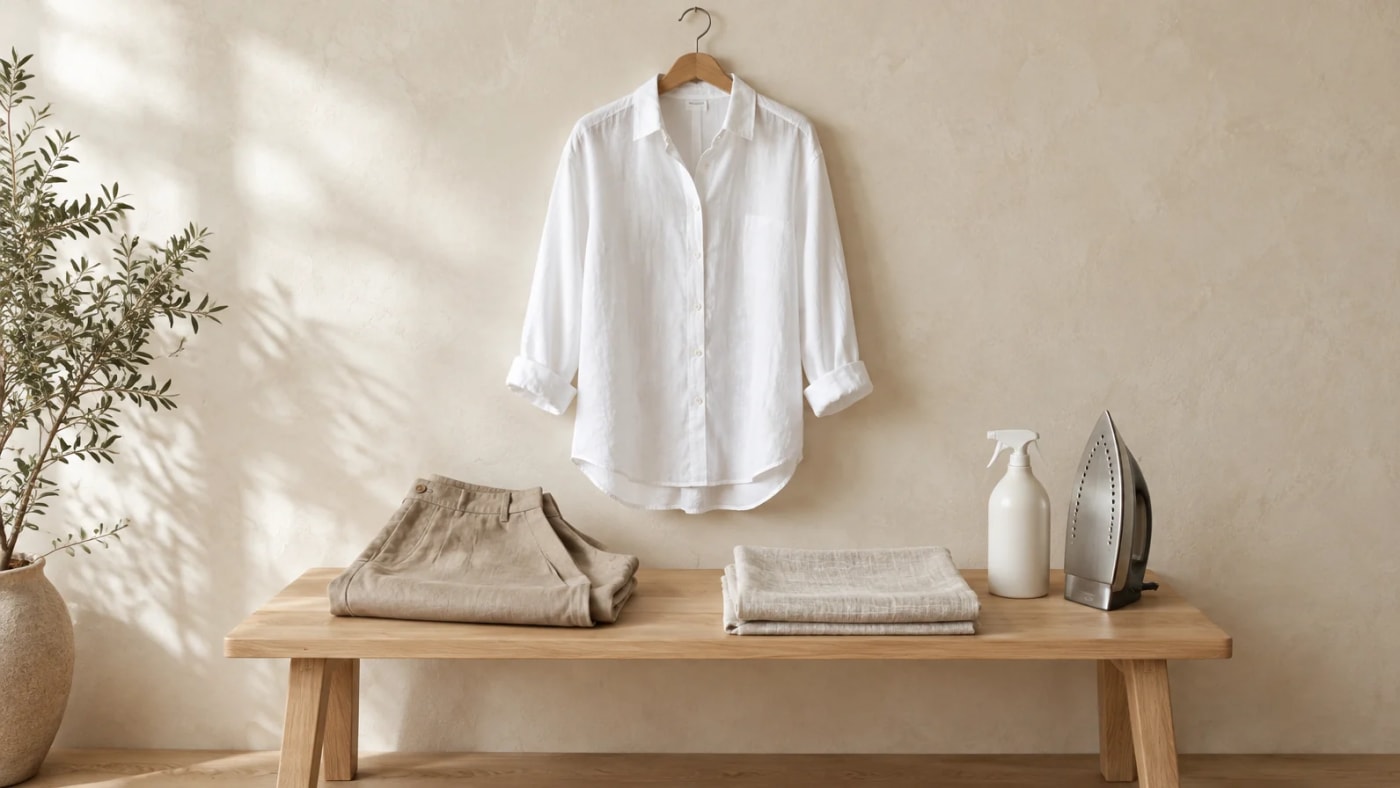
Linen is made from the fibres of the flax plant. It's cool to wear in summer, it gets softer with every wash, and it creases easily. Treated well, a linen shirt, a pair of wide-leg trousers or a tablecloth will look better in a few years than on the day it arrived. Here is how to wash, dry and iron it.
Start with the care label. Some linen is blended with cotton or viscose, some is pre-washed and some is not, and some dyed pieces need cooler water than natural linen. The label tells you what applies to your piece.
Washing
Most linen can be machine washed. A few habits make a big difference:
- Wash in cool or lukewarm water. Linen tolerates warm water better than wool, but cool water is gentler on colours and limits shrinkage in pieces that haven't been pre-washed.
- Use a mild liquid detergent. Powder can leave streaks in the weave. Skip chlorine bleach, which weakens flax fibres and can yellow natural linen; for white linen, an oxygen-based whitener used as directed is the gentler choice.
- Don't overload the drum. Linen absorbs a lot of water and gets heavy when wet. Give it room to move so it rinses clean and comes out less creased.
- Use a gentle cycle with a low spin. A fast spin presses deep creases into wet linen that are hard to iron out later.
- Wash dark and bright colours separately for the first few washes, in case the dye runs.
Fabric softener isn't needed. Linen softens on its own with washing and wear, and softener can leave a coating that makes the fabric less absorbent, which matters for napkins and tea towels.
Treating stains
Deal with stains while they're fresh. Blot, don't rub, then rinse from the back of the fabric with cold water. Hot water can set protein stains such as egg or milk. For wine or coffee on a tablecloth, rinse with cold water, work in a little liquid detergent, and wash as usual. Check that the stain is gone before drying, because heat sets what's left.
Drying
Line drying is the kindest option. Take linen out of the machine as soon as the cycle ends, shake each piece out firmly, and hang it:
- shirts on a hanger, with the collar and front placket pulled straight;
- trousers by the hem or the waistband, with the side seams lined up;
- tablecloths folded over a line, with the hems aligned.
Dry dark linen out of strong sunlight to keep the colour. A tumble dryer on low heat is fine if the label allows it, but take the pieces out while they're still slightly damp; over-dried linen feels stiff and is harder to iron.
Ironing
Linen irons best when it's damp. If it has dried completely, mist it with a spray bottle and roll it up in a towel for a few minutes so the moisture spreads evenly.
- Set the iron hot. Linen takes the highest setting on most irons. Use steam if it's dry.
- Iron dark linen on the reverse side. A hot iron can leave a shine on the face of dark fabric. For extra protection, put a thin cotton pressing cloth between the iron and the linen.
- Work from small parts to large. For a shirt: collar first (underside, then top), then cuffs, sleeves, the yoke, the two front panels and the back.
- Hang it straight away. Let a shirt cool on a hanger before you put it away, so it doesn't crease again.
For trousers, iron the pockets and waistband first, then each leg flat with the seams lined up. Wide-leg trousers usually look best without a pressed crease.
A large tablecloth is easier on a clean, flat table covered with a towel than on an ironing board. Iron it in sections and fold it loosely, or roll it around a cardboard tube to avoid sharp fold lines.
Living with creases
Not every crease has to go. Many people wear linen slightly rumpled on purpose. If you don't want to iron, hang a shirt in a steamy bathroom or use a handheld steamer: it won't look pressed, but the deep creases relax.
Storing linen
Store linen clean and fully dry, in a cool, ventilated place. Avoid plastic bags, which trap moisture. Folded linen eventually wears along its folds, so refold tablecloths and stored shirts differently from time to time.
A quick checklist
- Cool or lukewarm water, mild liquid detergent, no chlorine bleach.
- Gentle cycle, low spin, room in the drum.
- Line dry, or tumble on low and stop while damp.
- Iron damp and hot; dark linen on the reverse.
The marketplace's linen sellers list shirts, trousers and dresses, and linen for the table, in the shop.