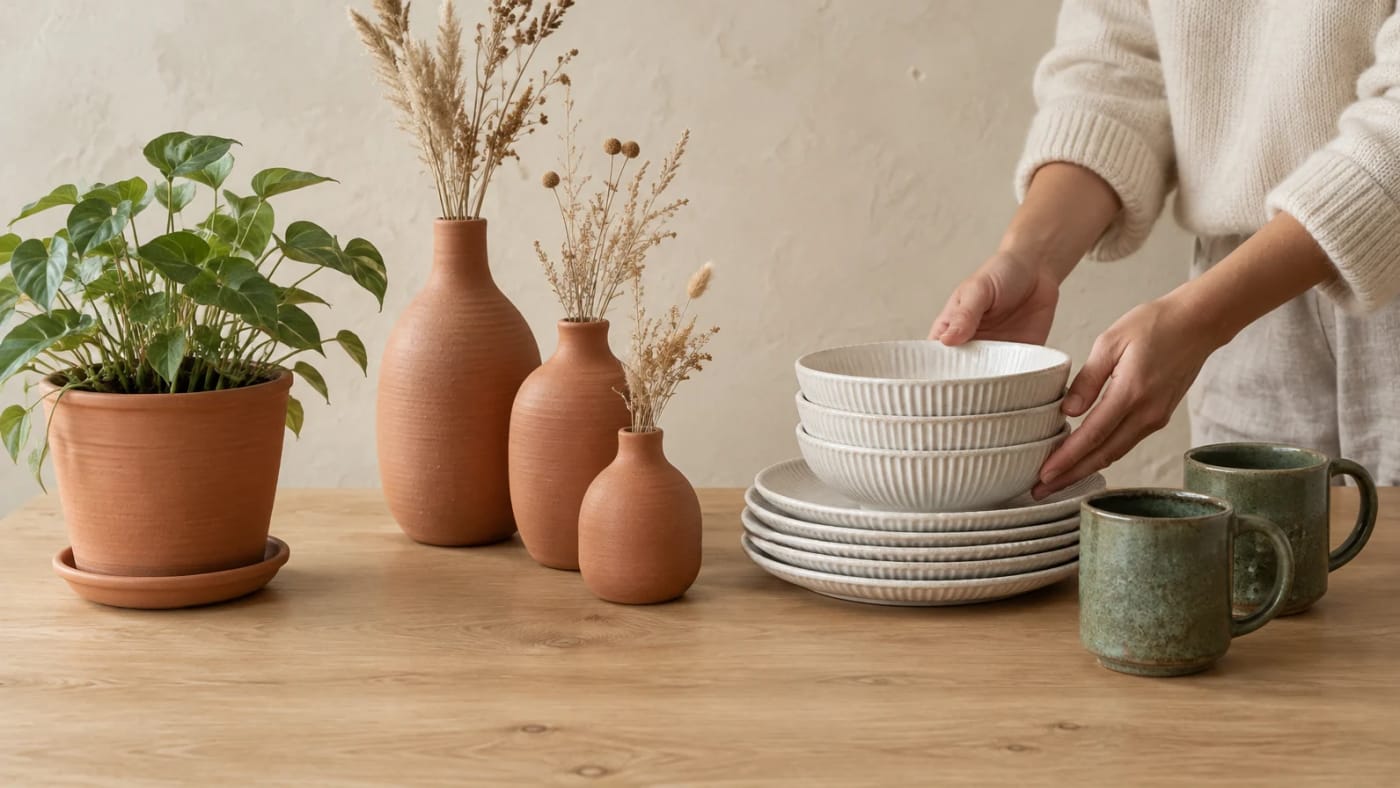
Terracotta and stoneware are both fired clay, but they behave differently at home. Terracotta is fired at lower temperatures and stays porous: it absorbs water, which is exactly why plants like it. Stoneware is fired hotter, so the clay becomes dense and holds water even without a glaze, which is why it suits mugs, plates and bowls. Knowing which one you have tells you how to use it, clean it and keep it from cracking.
The seller's product description and any care note come first, especially on whether a piece is safe for food, the dishwasher, the microwave or the oven. Glazes and clays vary from maker to maker, and a general guide can't tell you what a specific piece can take.
Terracotta
Planters
Unglazed terracotta breathes. Water evaporates through the walls, which keeps roots from sitting in wet soil but also means plants in terracotta dry out faster than in plastic or glazed pots. Check the soil with a finger before watering rather than following a fixed schedule.
- Soak a new pot before planting. Submerge it in water for a short while so the clay doesn't pull moisture out of fresh soil.
- Use the drainage hole and the saucer. Empty standing water from the saucer after watering. A saucer left full keeps the base wet, which can lead to mould and lets water seep onto the surface beneath.
- Protect furniture. Unglazed saucers can sweat moisture. Put a cork mat or a glazed tray under a terracotta saucer on wood floors and tables.
White crust and green bloom
White, chalky deposits on the outside are minerals from tap water and fertiliser drawn through the clay. A green film is algae. Both are harmless, and many people like the aged look. To clean them off, empty the pot, clean it with a stiff brush and a solution of one part white vinegar to about four parts water, rinse well, and let it dry completely.
Winter
Water expands when it freezes. A terracotta pot that has absorbed water can crack or flake if it freezes and thaws repeatedly, which is a real risk through a Canadian or northern US winter. Before the first hard frost, empty outdoor terracotta, brush it clean, let it dry, and store it indoors or in a sheltered, dry spot, upside down so water can't collect inside.
Terracotta vases
Unglazed terracotta vases will seep water through their walls. Use them for dried flowers and branches, or put a glass or plastic liner inside for fresh flowers.
Stoneware
Everyday use
Glazed stoneware is sturdy, but it's not unbreakable. Most chips happen at the rim, when plates are stacked carelessly or knocked against the tap. Stack plates with care, and don't nest bowls so tightly that they wedge.
Washing
Many stoneware pieces are dishwasher safe; check the seller's description. Even when they are, hand washing keeps glazes looking their best for longer, particularly matte and reactive glazes, which can show marks from detergent and from rubbing against other dishes. Wash with warm, soapy water and a soft sponge. Avoid steel wool, which can scratch the glaze and leave grey streaks.
Grey lines on a matte glaze are often metal marks from cutlery, not scratches. A paste of baking soda and water, rubbed gently with a soft cloth, usually removes them.
Heat and thermal shock
The main danger for stoneware is a sudden change in temperature, known as thermal shock. A dish that goes from the fridge into a hot oven, or a hot dish set down on a cold, wet counter, can crack.
- Only put a piece in the oven or microwave if the seller says it's suitable.
- Let refrigerated dishes come to room temperature before heating them.
- Put hot dishes on a trivet or a folded towel, not on stone or a wet surface.
- Don't pour boiling water into a mug that has been sitting somewhere cold. Warm it with hot tap water first.
Raw clay and unglazed bases
Unglazed areas, such as the foot ring at the base of a mug or a raw-clay band, absorb water and stains. Let them dry fully after washing before you put the piece away. If an unglazed base is rough, it can scratch a table: a felt pad helps, or gently smooth the foot with fine sandpaper.
When to retire a piece
A crack that you can feel with a fingernail, or crazing (a network of fine cracks in the glaze) on a surface that touches food, can trap bacteria and liquid. Move that piece to holding pens, keys or dried flowers rather than food.
A quick checklist
- Terracotta: soak before planting, empty saucers, store dry before frost.
- Stoneware: hand wash with a soft sponge, avoid sudden temperature changes.
- Dry unglazed bases fully before storing.
- Follow the seller's notes on food, dishwasher, microwave and oven use.
Terracotta and stoneware for the table and the garden are in the shop.