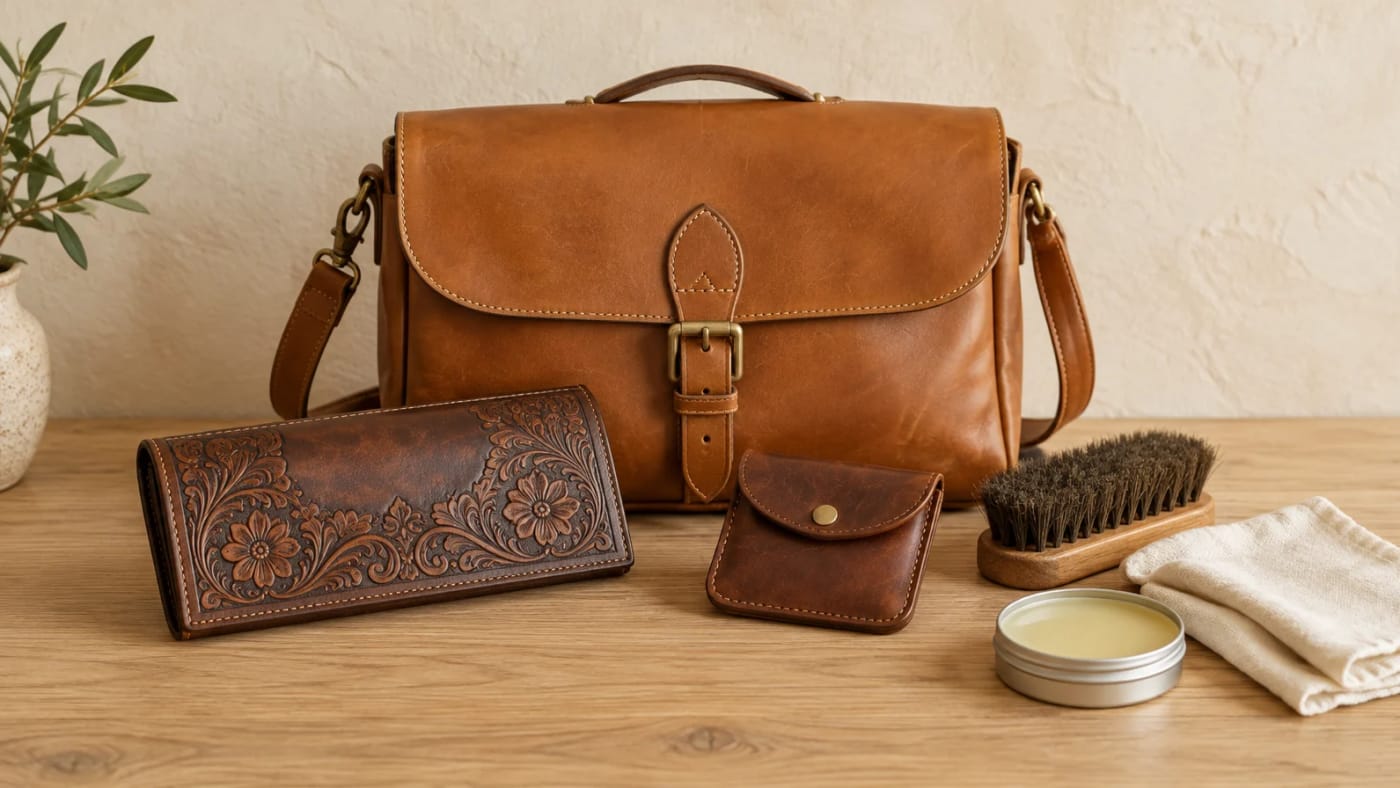
Leather is skin, and like skin it can dry out, stain and crack, or stay supple for decades. A satchel, a wallet or a small pouch needs very little care if you do the right things regularly: keep it clean, keep it conditioned, and keep it away from heat. Here is a routine for everyday leather goods.
Check the seller's product description and any care card that comes with the piece first. Finished, waxed, suede and painted leathers each have their own rules, and a product that doesn't suit one type of leather can mark another.
Know your leather
- Smooth, finished leather has a protective top coat. It resists water and dirt fairly well and is the easiest to look after.
- Unfinished or lightly finished leather, often vegetable-tanned, shows marks and darkens with use and sunlight. Many people like how it ages; it also absorbs water and oil more readily.
- Tooled leather has patterns pressed or carved into its surface. Dirt collects in the grooves, so it needs a soft brush rather than a cloth.
- Suede and nubuck have a brushed surface and need their own brushes and products. The advice below is for smooth leather.
If you're not sure which kind you have, put a single drop of water somewhere hidden. If it beads, the leather is finished; if it soaks in and darkens the spot, treat it as unfinished.
Everyday habits
- Empty bags regularly. Overstuffing stretches the leather and strains seams and handles. Wallets crammed with cards lose their shape the same way.
- Store bags stuffed and upright. Fill them loosely with tissue paper or a clean cloth so they keep their shape, and keep them in a breathable cotton dust bag rather than plastic.
- Keep leather away from heat. Radiators, car dashboards in summer and direct sun all dry leather out and fade it.
- Watch what you carry. Pens without caps, cosmetics and hand sanitizer leave marks that are hard to remove from the lining and the outside alike.
Cleaning
Wipe smooth leather with a soft, dry cloth every week or two to remove dust. For dirt:
- Dampen a soft cloth with water and wring it out until it's barely damp.
- Wipe the surface gently, working in small areas.
- Let it dry naturally at room temperature.
For heavier soiling, use a cleaner made for leather, following its instructions and testing it on a hidden spot first. Avoid household cleaners, baby wipes, alcohol and anything containing ammonia or bleach: they strip the leather's oils and can lift the finish. Clean tooled leather with a soft brush, such as a clean shoe brush, to reach into the pattern.
Conditioning
Conditioner replaces the oils that leather loses over time and keeps it from drying and cracking. How often depends on how much you use the piece and on your climate. Leather in a heated home in a dry winter needs it more often than leather in a humid summer. When the surface looks dull or feels dry, it's time.
- Clean the piece first, and let it dry.
- Apply a small amount of leather conditioner with a soft cloth, in circular strokes.
- Leave it to absorb as the product directs, then buff off the excess with a clean cloth.
Use less than you think you need. Too much conditioner leaves leather sticky and can darken it, especially unfinished leather. Test on a hidden spot first, because most conditioners darken leather slightly.
Rain, snow and salt
If leather gets wet, blot off the water with a towel and let it dry slowly at room temperature, stuffed with paper to hold its shape. Don't use a hair dryer or a heater. Once it's dry, condition it.
Winter streets bring road salt, which leaves white tide marks as it dries. Wipe them off promptly with a cloth dampened in clean water, let the leather dry, and condition it. A water-repellent spray made for leather helps before the snow arrives; test it on a hidden spot first.
Stains and scratches
- Light scratches on many leathers fade if you rub them gently with a clean fingertip; the warmth and the leather's own oils help.
- Grease or oil can sometimes be lifted by covering the spot with cornstarch, leaving it for several hours, then brushing it off. Don't rub it in.
- Ink, dye transfer from dark denim, and deep stains are best left to a leather-care professional. Home remedies often spread them.
Hardware and linings
Wipe buckles, clasps and zips with a dry cloth so moisture doesn't tarnish them. If a zip sticks, rub the teeth with a graphite pencil or a bar of soap. Shake out the lining regularly, and vacuum it with a brush attachment if crumbs collect in the corners.
A quick checklist
- Dust weekly; clean with a barely damp cloth.
- Condition when it looks dry, sparingly, after cleaning.
- Dry wet leather slowly, away from heat.
- Wipe off road salt the same day.
- Store stuffed, upright, in cotton, out of the sun.
Leather bags, wallets and pouches from the marketplace's sellers are in the shop.